Source anti bacterial waterproof sports socks for hiking, gym, and running
Compare 30 listings of anti bacterial waterproof sports socks featuring breathable and eco-friendly designs for outdoor activities. Buyers can evaluate specifications like material, thickness, and customization options from verified Chinese manufacturers.
Key considerations
Products List


Comprehensive Sourcing Guide
Strategic Sourcing Guide for Anti-Bacterial Waterproof Sports Socks
Understanding Product Attributes and Technical Specifications
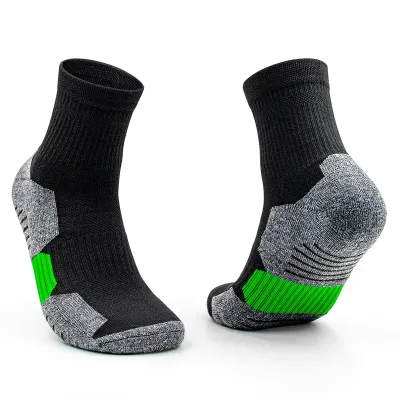
When sourcing anti-bacterial waterproof sports socks, buyers must first distinguish between the core functional requirements and the specific product attributes observed in the current market. The primary keyword implies a need for moisture management, microbial resistance, and water resistance. However, the available product data reveals a complex landscape where "Anti-Bacterial" is a confirmed attribute, while "Waterproof" requires careful verification against material compositions. The observed product models, such as BAT-B08, JS-F793, and JS-F804, indicate a variety of styles ranging from ankle to knee lengths. The standard thickness is noted as "Normal," which suggests these are not heavy-duty winter gear but rather versatile options suitable for spring, autumn, and summer conditions.
Material composition is a critical differentiator. The supply chain data lists both cotton and polyester blends, as well as nylon. While cotton is breathable and comfortable, its natural water absorption properties often conflict with a "waterproof" claim unless treated with specific coatings. Nylon, listed as a material for specific models like YC-1456, offers superior durability and moisture-wicking capabilities, which are essential for sports applications. The "Eco-Friendly" and "Disposable" attributes found in the data suggest a segment of the market focused on single-use or sustainable solutions, which may not align with the durability expected of high-performance waterproof sports socks. Buyers must verify if the "waterproof" claim refers to a durable water repellent (DWR) finish or a fully waterproof membrane, as the latter is rare in standard sock constructions without compromising breathability.
The functional attributes listed include "Sweat-absorbent," "Breathable," and "Anti-slip." These features are vital for sports performance. The "Anti-Bacterial" feature is explicitly confirmed in the product specifications, addressing the need for hygiene during extended wear. However, the "Disposable" attribute presents a contradiction for a waterproof sports sock intended for long-term athletic use. This suggests that the market contains diverse product lines, and buyers must clearly define whether they require a reusable athletic sock or a disposable hygiene solution. The "Trampoline Socks," "Yoga Socks," and "Sport Socks" categories indicate that the product range is segmented by activity, requiring specific design considerations for grip and support.
Compliance, Certification, and Safety Standards
In the B2B procurement of sports apparel, compliance with safety and quality standards is non-negotiable. The provided data confirms that "Needle Detection" is a standard process ("Yes"), which is a critical quality control measure for textile products to ensure no metal fragments remain in the final goods. This is particularly important for sports equipment that undergoes rigorous physical stress. The "Quality" attribute is described as "Top High," but this is a subjective observation. Buyers must verify this claim through independent third-party testing rather than relying on supplier self-assessment.
Regarding chemical and material safety, the background information mentions certifications such as GOTS, BSCI, Oeko-Tex, and ISO 9001. However, the instruction explicitly states that these are low-confidence background facts and should not be used to assert that every listed product satisfies them. Therefore, buyers must treat these as verification targets rather than guaranteed attributes. When sourcing anti-bacterial socks, the specific standard for the anti-bacterial treatment must be confirmed. Is it a silver-ion treatment, a copper-based solution, or a chemical coating? The "Cotton/Polyester" standard is listed, but the specific ratio and the nature of the anti-bacterial treatment are not detailed in the core facts.
Buyers should request test reports that align with international standards for textile safety, such as those limiting the presence of harmful substances like azo dyes or formaldehyde. The "Needle Detection" process is a physical safety standard, but chemical compliance is equally vital for socks worn directly against the skin, especially during sports where sweat can increase skin permeability. The "Eco-Friendly" attribute suggests an environmental consideration, but without a specific certification like GOTS or Oeko-Tex confirmed in the product data, this claim remains an observation. Procurement teams must demand evidence of compliance with local and international regulations regarding chemical usage in textiles to ensure the product is safe for end-users and compliant with import regulations in target markets.
Cost Drivers and Pricing Structure Analysis
The observed price range for the products in the market spans from $0.30 to $20.00 USD. This wide variance indicates significant differences in material quality, manufacturing complexity, and brand positioning. The lower end of the spectrum likely corresponds to basic cotton or polyester blends with standard anti-bacterial treatments, possibly in the "Disposable" category. The higher end, reaching $20, may reflect premium materials like high-grade nylon, advanced waterproofing technologies, or specialized designs for specific sports like trampoline or yoga.
Minimum Order Quantity (MOQ) is another critical cost driver, with observed ranges from 2 to 3,000 units. This flexibility allows buyers to test the market with small orders or commit to larger volumes for better unit economics. The "Selling Units" are listed as "Single Item," but the "prod_packing" specifications show bulk packaging options like "1 pairs/Oppbag, 10 pairs/Big Bag" and "240 pairs/ctn." These packing configurations directly impact logistics costs and storage efficiency. The "Single Gross Weight" of 0.100kg and package size of 25x10x2cm are essential for calculating freight costs, especially for air freight where weight and volume are paramount.
Customization is a significant factor in cost. The data confirms that "Customization," "OEM Designs," and "Custom Lables" are available. Custom printing methods, such as "Digitalprinting," allow for unique patterns and logos, which can increase the unit cost due to setup fees and lower production efficiency. The "Logo Position" on the "Body" of the sock is a specific design choice that may require additional tooling or printing steps. Buyers should anticipate that higher levels of customization, such as unique patterns or specific eco-friendly material requests, will push the price toward the upper end of the observed range. Additionally, the "Sample" availability allows for customization verification, but sample costs and lead times should be factored into the overall procurement budget.
Typical Applications and Use Cases
The versatility of the observed product attributes suggests a wide range of applications, from casual outdoor wear to specialized sports activities. The "Occasion" is listed as "Outdoor," and the "Season" includes Spring, Autumn, and Summer, indicating suitability for moderate climates. The specific categorization into "Trampoline Socks," "Yoga Socks," "Sport Socks," "Crew Socks," and "Compression Socks" highlights the need for functional differentiation. For instance, "Trampoline Socks" likely require enhanced grip and durability, while "Yoga Socks" may prioritize flexibility and breathability.
The "Anti-Bacterial" feature is particularly relevant for sports where perspiration is high, such as running, gym workouts, or team sports. The "Breathable" attribute complements this by allowing heat dissipation, preventing the buildup of moisture that can lead to fungal infections. The "Anti-slip" feature is crucial for activities requiring stability, such as yoga or trampoline jumping, where foot slippage can lead to injury. The "Compression Socks" category suggests a focus on muscle support and circulation, which is beneficial for recovery and endurance sports.
However, the "Disposable" attribute introduces a unique use case. Disposable anti-bacterial socks might be intended for travel, medical settings, or specific hygiene-conscious events where reusability is not a priority. This contrasts with the "Waterproof" requirement, which is typically associated with reusable outdoor gear. Buyers must align the product selection with the intended application. For example, a waterproof sports sock for hiking would likely be a reusable, high-durability item, whereas a disposable option might be suitable for short-term use in wet conditions where hygiene is the primary concern. The "Regular" style and "Ankle" length are versatile options for general sports, while "Knee Socks" and "Compression Socks" cater to more specific athletic needs.
Supplier Evaluation and Selection Criteria
Selecting the right supplier requires a rigorous evaluation process based on the available data points. The "Supply Type" is listed as "OEM Service," indicating that suppliers are capable of manufacturing private label products. This is a positive indicator for buyers looking to brand their own line of sports socks. The "OEM Designs Welcomed" attribute further supports this, suggesting flexibility in product development. However, the "Quality" attribute being "Top High" is a claim that must be validated. Buyers should request references, past performance data, and third-party audit reports to substantiate this claim.
The "Needle Detection" process is a key indicator of a supplier's commitment to safety and quality control. A supplier that explicitly lists this as a standard procedure is likely to have robust internal quality assurance systems. The "Customization" capabilities, including "Digitalprinting" and "Custom Lables," demonstrate technical proficiency. Buyers should assess the supplier's ability to handle complex customization requests, such as specific logo placements and pattern types. The "Sample" availability is a crucial step in the evaluation process, allowing buyers to verify the physical quality, fit, and functionality of the product before committing to a large order.
Location is another factor, with the "prod_origin" listed as "China." While this provides access to a vast manufacturing base, buyers must consider logistics, lead times, and potential trade barriers. The "Single Package Size" and "240 pairs/ctn" specifications suggest efficient packing for international shipping, but buyers should verify the actual lead times and production capacity. The "MOQ" range of 2 to 3,000 units offers flexibility, but buyers should negotiate terms that align with their inventory strategy. A supplier that can accommodate low MOQs for sampling and high MOQs for mass production is ideal. Additionally, the "Eco-Friendly" attribute should be scrutinized; buyers should ask for specific details on the materials and processes used to ensure they meet the buyer's sustainability goals.
Quality Control and Long-Term Procurement Considerations
Ensuring consistent quality in anti-bacterial waterproof sports socks requires a proactive quality control strategy. The "Needle Detection" is a baseline requirement, but buyers should also implement pre-shipment inspections to verify the "Anti-Bacterial" efficacy and "Waterproof" performance. Since the "Anti-Bacterial" feature is a key selling point, buyers must request test reports from accredited laboratories to confirm the level of bacterial reduction claimed. Similarly, the "Waterproof" claim, while not explicitly detailed in the core facts, must be tested for durability and effectiveness under real-world conditions.
Long-term procurement considerations involve building a sustainable relationship with suppliers who can scale with demand. The "Customization" and "OEM" capabilities suggest that suppliers are willing to adapt to changing market needs. However, buyers should establish clear quality benchmarks and communication channels to ensure consistency. The "Pattern Type" being "Customized" or "Print" requires careful management of design files and printing standards to avoid color variations or pattern misalignments. The "Single Gross Weight" and "Single Package Size" are critical for logistics planning, and any changes in these specifications should be communicated well in advance to avoid shipping disruptions.
The "Season" attributes (Spring, Autumn, Summer) indicate that the product line may need to be adjusted for different climates. Buyers should plan their procurement cycles to align with seasonal demand, ensuring that inventory levels are optimized. The "Disposable" attribute suggests a potential niche market, but buyers should be cautious about relying solely on this segment if their primary focus is on durable sports gear. Finally, the "Quality" claim of "Top High" should be continuously monitored through regular audits and feedback loops with the end-users to ensure that the product maintains its performance standards over time. By adhering to these rigorous quality control measures and strategic planning, buyers can secure a reliable supply of high-performance anti-bacterial waterproof sports socks.
FAQs
How can I verify the anti-bacterial feature of these socks?
The product specifications explicitly list anti-bacterial as a confirmed attribute. Buyers should request test reports to validate the specific treatment method used, such as silver-ion or chemical coating, rather than relying solely on the supplier's claim.
What materials are used for the waterproof sports socks?
The observed materials include cotton, polyester, and nylon blends. While nylon offers superior moisture-wicking, cotton is noted for breathability. Buyers must verify if a specific waterproof coating is applied, as the base materials are naturally absorbent.
Which customization options are available for logo and design?
Customization is available with digital printing methods and custom labels accepted on the body. OEM designs are welcomed, allowing for unique patterns and specific logo placements. This service supports branding needs for private label products.
Can I order small quantities for testing before bulk purchase?
Yes, the minimum order quantity ranges from 2 to 3000 units, allowing for small test orders. Samples are accepted for customization verification. This flexibility helps buyers assess quality and fit before committing to larger production volumes.
How do I ensure safety and quality during production?
The supply chain data confirms that needle detection is performed as a standard quality control measure. Buyers should also request third-party audits to verify the 'Top High' quality claim and ensure compliance with chemical safety standards for skin contact.
What is the typical packaging configuration for bulk orders?
Packaging options include 1 pair per OPP bag with 10 pairs in a big bag, or 240 pairs per carton. The carton size is approximately 68 by 47 by 30 cm. This configuration optimizes storage and reduces freight costs for international shipping.